
Project Overview
This research examines how emerging energy source [carbon capture and storage (CCS), nuclear energy, and data centres] and their infrastructures are experienced and how they enter local conversations in the Lakeland region of Northeastern Alberta. Using ethnographic research, I trace how residents interpret these developments in relation to existing oil and gas economies, environmental responsibility, and imagined regional futures.
Background
Situated in Alberta, a province that holds 97% of Canada’s oil reserves and where oil and gas account for a significant share of GDP and employment, this study unfolds amid overlapping pressures: climate targets, emissions reduction policies, global energy transitions, and ongoing debates over economic security and Indigenous rights. Rather than approaching these tensions abstractly, the research traces how they are lived, discussed, and negotiated in everyday contexts.
Using interviews, focus groups, participant observation, and analysis of public discourse, the project examines how people make sense of economic change, balance environmental concerns with livelihood security, and navigate Indigenous–settler relationships around land, development, and reconciliation. Importantly, the research resists framing energy debates as polarized or purely oppositional. Indigenous and settler communities, for example, may oppose certain projects while simultaneously working in or with energy companies or initiatives, just as some skeptics of climate policy nonetheless seek opportunities in renewable technologies.
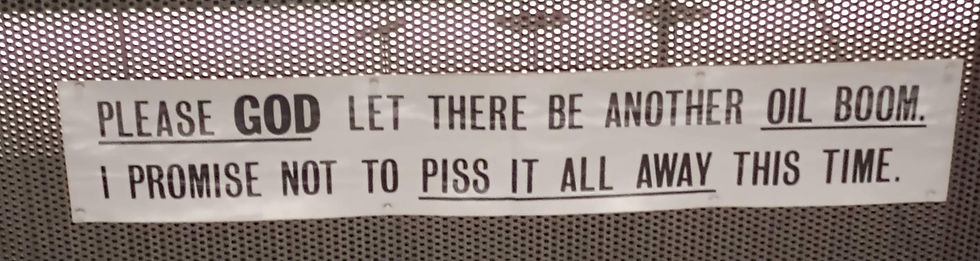
Building on previous work on Whiteness and identity in Alberta, this project explores how narratives of energy are entwined with belonging, history, and moral responsibility. These narratives shape imagined futures marked by nostalgia for past booms, optimism about innovation, or anxiety about decline—revealing how energy transition is as much a cultural and affective process as an economic one.

Research Questions
According to Lloyd’s Register Foundation (2023), Albertans express lower levels of concern about climate change than other Canadians: only 39% view it as a “very serious threat” over the next 20 years, compared to 61% nationally.
At the same time, Alberta produces some of the most carbon-intensive oil on the planet. Its bitumen requires energy-heavy extraction and upgrading, leading to emissions that are over three times the national per-capita average (Bataille et al., 2021). Scholars and environmental organizations have called for a planned phase-out of Alberta’s oil sands, ideally well before 2050, to meet Canada’s international obligations (Hussey et al., 2018). Yet, for many Albertans, questions about “what to do” about oil and gas, and “when” to act, remain deferred to an indefinite future. This temporal lag between global climate imperatives and local action is not just a political problem; it is a cultural one.
My research investigates this moment in time by asking: What does the future of energy look like to Albertans, and on whose terms? What competing temporalities, narratives, and moral logics shape how Albertans imagine a “just transition” or resist the idea altogether? And how do race and settler colonialism shape these imaginaries of the future?
While the proposed Pathways Alliance's Carbon Capture & Storage project is a signifiant (renewed focus as of late 2025) project when thinking of the future of energy in the Cold Lake and Lakeland regions, other energy generation projects (such as Alberta's public engagement on nuclear), and new uses (draws?) on energy (such as, data centres) also enter my investigation and daily conversations.
“We all want to be reassured that groundwater is not going to be affected,” in the event of a pipeline rupture, for example, [says local resident A.] Shapka. "And I think the biggest thing I find most unsettling... is that this is permanent.” (Lakeland news article, Nov 7, 2023)
"This is not just a pipeline. It's a stronger economy."
Pathways Alliance Billboard campaign, 2025
Doug Zarowny, (local resident) ... acknowledges, “My answer is biased. I’m gainfully employed in oil and gas. I’m for carbon capture as it will extend the longevity of this industry in the province.” (Lakeland news article, Nov 7, 2023)
